

Natural pools in Madeira and the Azores: how to choose the best experience
The natural pools in Madeira and the Azores are one of the best ways to feel the Atlantic without turning the trip into a simple day at the beach. In Madeira, the experience is more direct, with well structured bathing areas, easy access and places where dark rock creates natural pools with striking landscapes. In the Azores, bathing takes on a more geothermal dimension, with thermal waters, lava areas and a stronger connection to volcanic activity.
In Madeira, the natural pool is associated with the coastline, the shape of the rock and the contrast between the deep blue ocean and the island’s volcanic origin. It is a visually powerful experience, but also a practical one. That is why, when talking about natural pools in Madeira, the destination should be seen as ideal for those looking for an accessible bathing experience that is easy to include in an itinerary.
The essential point is not to place all experiences in the same category. A natural pool formed by volcanic rock is not the same as a sandy beach, an urban bathing complex or a thermal area. Seawater may be calmer in a protected area, colder in an open zone and more unpredictable when the swell increases. For this reason, a well designed journey should consider the time of year, sea conditions, accessibility, parking, safety and the type of atmosphere desired: wilder, more family friendly, more urban or more relaxing.
Natural pools in Madeira: Porto Moniz, Seixal and Funchal
Madeira’s natural pools are among the main attractions for those who want to combine natural scenery, Atlantic bathing and a clear sense of being on a volcanic island. The best known area is Porto Moniz, but there are other strong options, such as the natural pools of Seixal, Doca do Cavacas and Poças do Gomes.
Madeira’s natural pools are officially presented as bathing areas connected to the island’s volcanic origin, often formed by volcanic rocks and adapted for swimmers. The island makes it possible to discover several types of bathing experience in a compact territory, with panoramic roads and stopping points that can be included in a private itinerary.
Natural pools of Porto Moniz
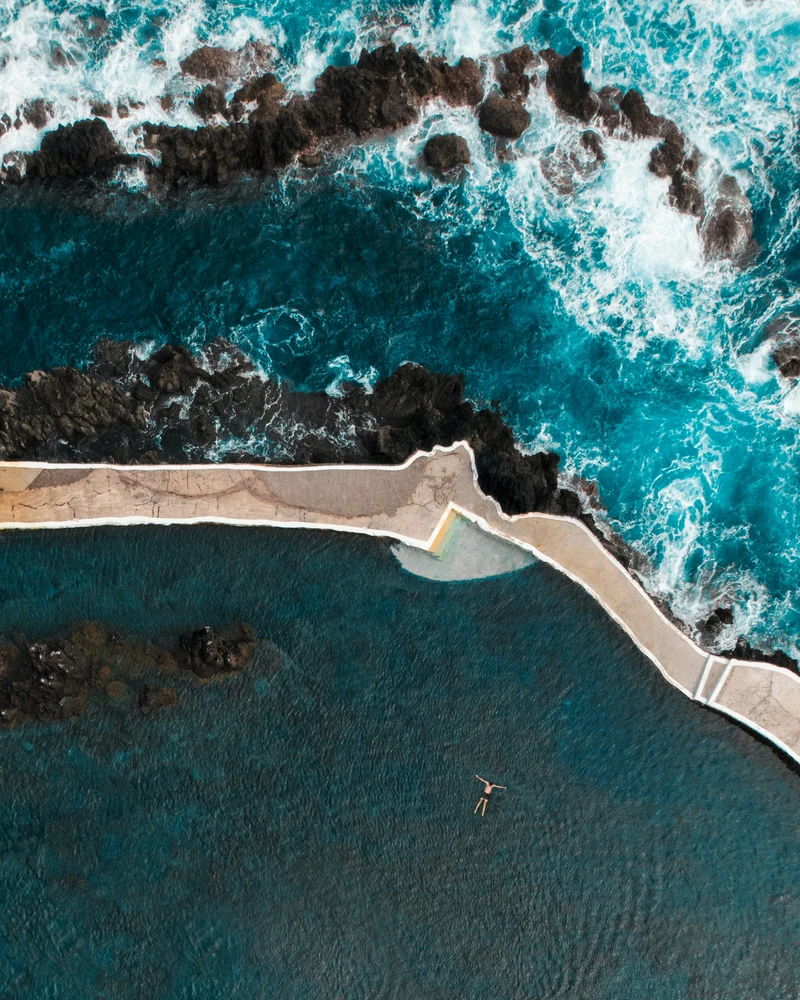
The natural pools of Porto Moniz are the best known example of a natural pool in Madeira. The setting is easy to understand: lava rocks, salt water, natural and built walls, circulation areas and an environment where the Atlantic Ocean is always present. It is a space designed to welcome visitors, with better access control, monitored water quality and support facilities.
The great value of Porto Moniz lies in the balance between the rocky environment and the organisation of the space. It is not just a rock pool by the sea. It is a set of pools where the rock creates natural protection and a bathing area that allows visitors to spend several hours in comfort. For families, couples or travellers who want a safe first approach, the natural pool of Porto Moniz is always a good choice. The location is well maintained, visually strong and large enough to be the main stop on a day along the north coast.
It is also one of the best places to understand how Madeira transforms its geology into a tourism experience. Ancient lava, dark rock and the sea create a powerful image, while the experience remains accessible and ideal for swimming. This combination sets Porto Moniz apart from a traditional beach and justifies its presence in almost every itinerary.
Natural pools of Seixal and Poças das Lesmas
The natural pools of Seixal have a different personality. If Porto Moniz is more structured, Seixal brings visitors closer to a Madeira that feels more rustic, more dramatic and more connected to the north coast. The lava formations, cliffs, nearby black sand and the green setting of the island create a highly visual experience. Here, the natural pool may feel less designed for tourism and more integrated into the landscape.
Poças das Lesmas are a clear example of this aesthetic. The pool, the rock, the clear water and the natural surroundings make the place especially interesting for photography and for those seeking a less urban feeling. Even so, it is important to pay attention to sea conditions.
Seixal also allows different experiences to be combined in a single day. There are black sand beaches in Madeira, bathing areas with different levels of access and nearby viewpoints that add value to the route. For those looking for natural beauty, clear water and a more evident connection to the island’s volcanic origin, this region deserves time.
Doca do Cavacas, Poças do Gomes and the south coast
In Funchal, Doca do Cavacas offers a different approach. It does not have the wild drama of Seixal or the iconic status of Porto Moniz, but it is very useful for those staying in the city who want an Atlantic swim without crossing the island. Its proximity to Praia Formosa, Poças do Gomes and the south coast makes this area a practical option to include at the end of the day or during a lighter morning.
Doca do Cavacas works well for travellers who want access to the sea but prefer to avoid a long journey. It is an urban bathing area, with direct access, a rocky setting and visual connection to Praia Formosa.
Praia da Calheta is known for its golden sand and calm waters, offering a different experience from the natural pools. It does not replace a volcanic natural pool, but it can be the perfect location for those looking for a more relaxing swim, especially when travelling with children or when the aim is simply to relax by the sea. Calheta helps show that Madeira is not only rock and lava, but also has beaches prepared for a more classic bathing experience.
| Location | Type of experience | Best for |
|---|---|---|
| Porto Moniz | Structured natural pool | Families, first visit and comfort |
| Seixal | Wilder natural pool | Photography, scenery and volcanic atmosphere |
| Doca do Cavacas | Urban bathing complex | Those staying in Funchal who want quick access to the sea |
| Praia da Calheta | Protected sandy beach | Predictable bathing, families and calmer waters |
| Prainha | Natural dark sand beach | Local atmosphere and volcanic landscape |
Madeira beyond the pools: beaches, coves and bathing areas
The island has places where the natural pool is the main feature, but it also has sandy beaches, sea access points, bathing platforms and small coastal areas that help build a more complete itinerary. This diversity is useful for adapting the trip to the weather, sea conditions and the profile of each traveller.
Prainha, for example, shows a more discreet Madeira, with dark sand, a protected environment and a more intimate scale. Calheta offers a more comfortable solution, with golden sand and clear waters in an area prepared for calmer bathing. For those who want to alternate between the island’s volcanic side and its beach side, this combination prevents the trip from depending only on one specific natural pool.
For a more personalised approach, it makes sense to integrate these places into a custom designed itinerary. Atelier Travel Iceland can structure this type of journey with attention to rhythm, comfort and the choice of the right places for each traveller profile. A route through the islands of Madeira and the Azores can combine natural pools, viewpoints, beaches, local gastronomy and nature experiences.
Another advantage of careful planning is avoiding repetitive choices. Those who visit Porto Moniz and Seixal on the same day will already have a strong understanding of the north coast, volcanic rock and natural pools with open views over the Atlantic. In this case, it may make more sense to reserve another moment for the south coast, Praia Formosa, Praia da Calheta or an urban bathing area in Funchal.
In practical terms, Madeira is the most obvious choice for those who want to combine accessibility, volcanic scenery and Atlantic bathing in a compact territory. There is enough diversity for different travel styles, from travellers who want a safe and comfortable natural pool to those who prefer a rockier landscape. With a personalised itinerary through the Portuguese islands, it is possible to adjust schedules, choose the best bathing spots and avoid the feeling of always rushing between places.
For this reason, Madeira’s natural pools should be understood as a quick access option to the coastal volcanic landscape. Porto Moniz offers structure, Seixal offers visual intensity, Doca do Cavacas offers convenience and Calheta offers a more classic pause. This combination creates a strong base for any traveller who wants to feel the Atlantic with comfort, natural beauty and real variety of experiences.
Azores: natural pools with volcanic origin and thermal waters
Natural pools take on another meaning when entering Azorean territory. While Madeira concentrates some of its best known bathing areas within a short route, the Azores spread the experience across several islands, with a strong presence of volcanic activity, thermal waters, calderas and landscapes where bathing can take place among rocks, lava, dense vegetation and the Atlantic Ocean. Here, a natural pool is not just a place to swim. It can be a thermal experience, a protected coastal area, a rocky bay or a place where the sea mixes with geothermal heat.
The natural pools of Madeira and the Azores should not be seen as a choice between two identical destinations. In the Azores, the experience is more dispersed depending on the island chosen and is often connected to the geological side. São Miguel concentrates some of the best known locations, such as Ponta da Ferraria, Caldeira Velha, Ribeira Grande and Furnas. Faial and Graciosa offer Atlantic alternatives such as Varadouro and Carapacho.
Ponta da Ferraria and the meeting between ocean and thermal spring
Ponta da Ferraria, in São Miguel, is one of the strongest examples of what makes the Azores different. Bathing takes place in an area where the sea is influenced by a thermal spring. The seawater heats naturally, creating a rare experience between ocean, rock and geothermal activity. The temperature depends on the tide and sea conditions, and it is precisely this variation that makes the place so particular.
This type of location demands respect for the sea. Ferraria can offer an invigorating and memorable swim, but it should not be treated like a conventional swimming pool. The tide, swell and access should be assessed before entering. For those looking for natural pools with a more intense side, Ferraria is one of the best choices. The visit can work better when combined with viewpoints, coastal scenery and a broader reading of the island’s volcanic nature.
The official information from the Azores Natural Parks about Ponta da Ferraria helps frame the geological and natural importance of this area. For the traveller, it is important to understand that this is not only heated water, but a meeting between ancient lava, open sea and underground heat. This combination is difficult to replicate and is one of the most remarkable experiences.
Caldeira Velha, Ribeira Grande and Furnas
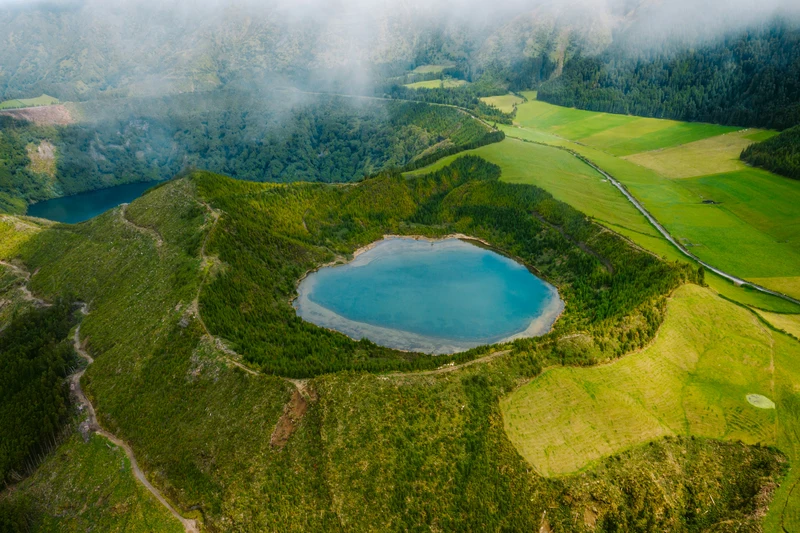
Caldeira Velha, in the Ribeira Grande region, shows another side of the Azores. The experience is no longer centred on the sea and moves closer to a thermal environment surrounded by vegetation, humidity, rock and hot water. It is a place where volcanic activity is felt directly, not only seen as landscape. The thermal waters, small pools and presence of calderas make this area different from Madeira’s coastal bathing zones.
In terms of itinerary, Caldeira Velha can combine well with Ribeira Grande, viewpoints along the north coast of São Miguel and other places associated with the island’s volcanic origin.
Furnas and Terra Nostra Park reinforce this dimension. The fumaroles, calderas, steam and hot water are part of an Azorean identity that goes beyond sea bathing. There are several pools and spaces where thermal waters take the main role. Some are more touristic, while others are more integrated into the landscape.
For those who want to relax, this thermal side of the Azores may be more suitable than a sequence of beaches. A natural pool by the sea can be excellent on a sunny day, but thermal waters remain attractive even when the weather is unstable.
Faial, Graciosa and other Atlantic pools
Faial adds another layer to the experience. Varadouro, for example, is a bathing area strongly associated with contact with the sea, with natural pools and an Atlantic setting. Faial works well for travellers who enjoy landscape, sea, human scale and bathing spots without the pressure of the most visited locations.
Varadouro can be understood as a strong alternative for those who want a natural pool with local character. The presence of the deep blue ocean, dark rock and the scale of the landscape create a feeling different from that found in more urban areas.
In Graciosa, Carapacho is another relevant point. Its pools are associated with a coastal environment with clear water, volcanic origin and surroundings that combine rest and landscape. Graciosa has a more discreet scale, which can be an advantage for those looking for a quieter trip.
Mosteiro, Carapacho, Varadouro and other bathing areas show that natural pools can be the starting point for very different journeys.
How to choose between Madeira and the Azores for beaches and natural pools
The choice between Madeira and the Azores should start with the type of trip desired. Madeira is more direct for those who want accessible natural pools, organised bathing areas and a combination of coastal roads, viewpoints and swimming. The Azores are more interesting for those looking for thermal waters, active geology, volcanic atmosphere and an experience distributed across several islands.
For a first approach, Madeira tends to be easier. It is possible to visit natural pools, beaches and coves without changing island. The Azores require more strategic choices: São Miguel is strong for thermal waters and geothermal experiences, Faial offers a quieter Atlantic relationship and Graciosa is ideal for those looking for rest.
It is also important to remember that the sea sets the rules. Even the best natural pools may not be at their best on certain days. Swell, wind and tide influence access and comfort. For this reason, a well planned journey should include alternatives: a coastal natural pool, a thermal area, a protected beach, a viewpoint, a gastronomic experience or a cultural visit. This flexibility is especially important in the Azores, where the weather changes quickly and where the richness of the destination lies precisely in its diversity.
Contacts
If you are planning a private journey focused on the natural pools of Madeira and the Azores, with a careful selection of bathing areas, thermal waters, volcanic landscapes and experiences adapted to your rhythm, you can speak to us about your trip so that we can design a comfortable, coherent and personalised itinerary.