

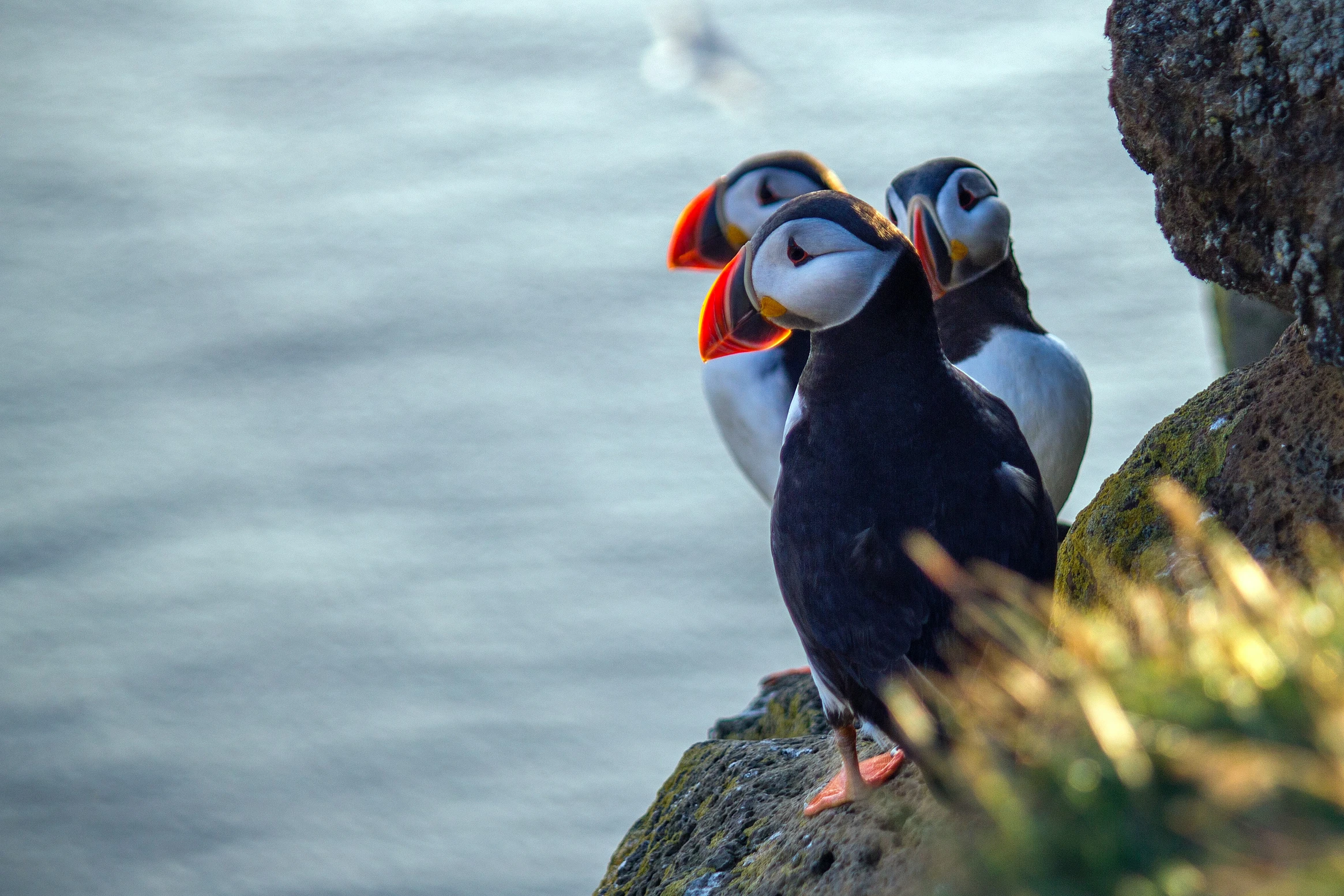
Come and discover Iceland’s puffins
Puffins in Iceland: where to see them and why they are so special
There are many reasons to visit Iceland. Puffins are one of them, and this is not a minor detail. These birds, known in Portuguese as sea parrots, combine a distinctive appearance with behaviours that are rare in the animal world, making them particularly attractive for both travellers and photographers.
Why puffins attract so much attention
The first impact is visual:
Colourful beak in shades of orange, yellow and blue
Expressive eyes
Compact body with a posture similar to a penguin
Awkward movement on land, almost comical
But it is not only about appearance. Their behaviour strengthens this connection:
They form lifelong pairs
They share responsibility for feeding their chicks
They live in highly social colonies
It is easy to project human traits onto these birds. And that increases their appeal.
When and where to see puffins in Iceland
Puffins spend most of the year at sea. They only return to land during the breeding season:
Period: early May to August
Reason: nesting and raising their chicks
If you are deciding the best time to travel, this period fits mainly within the summer months. To compare this experience with other times of year, also see our guide on when to visit Iceland.
Iceland is central to this cycle. It is estimated that around 60% of the world population of Atlantic puffins passes through here, with colonies exceeding six million individuals.
Key locations:
Látrabjarg: one of the largest bird cliffs in Europe, around 14 km long and up to 441 metres high
Westfjords: less touristy, with a higher density of birds
Other coastal areas accessible from Reykjavík
Puffins always return to the place where they were born. This makes certain locations extremely consistent for observation.
Abilities that are not obvious
Despite their appearance, puffins are highly efficient:
Diving: down to around 60 metres deep
Swimming: they use their wings for underwater propulsion
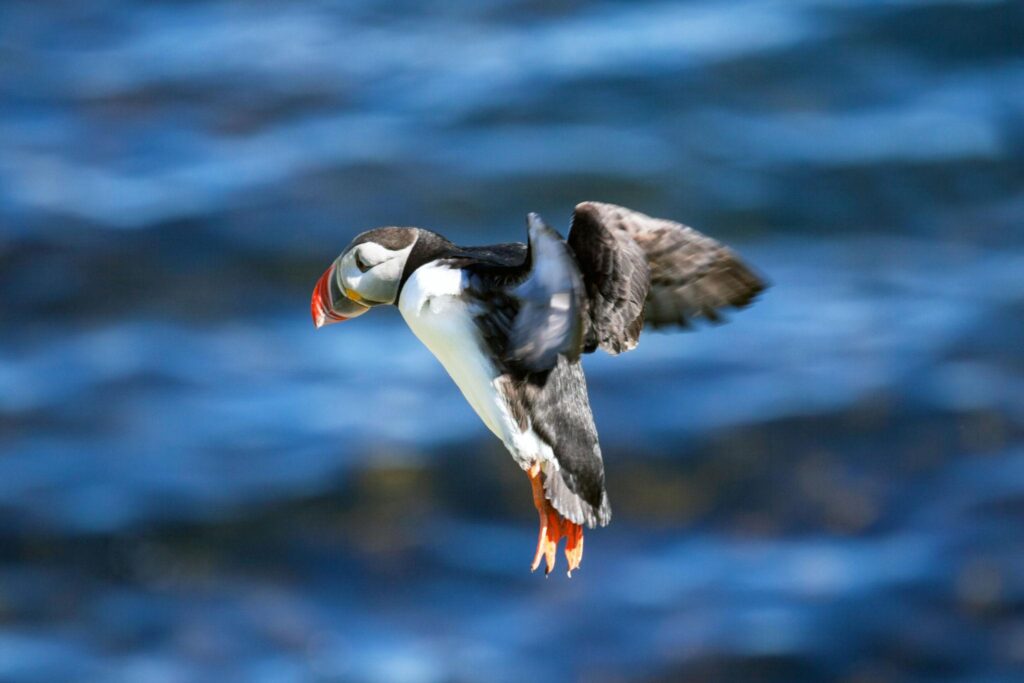
Flight: up to 80 km per hour
Wing beats: can reach around 400 to 440 beats per minute
Take off is particularly characteristic: they need to gain momentum on the water before becoming airborne. Visually, it looks clumsy. Technically, it is effective.
Why observing puffins in Iceland is different
There are three factors that elevate the experience:
Proximity
In places such as Látrabjarg, puffins are not very afraid of human presence, allowing close range observation.
Scale
You are not seeing a few isolated birds. You are facing massive colonies.
Scenery
Cliffs, ocean and natural light create ideal conditions for photography and contemplation.
A critical point: conservation
Puffins are currently classified as a vulnerable species by the International Union for Conservation of Nature.
Their population has been declining, including in Iceland. The causes include:
Climate change
Reduction in available food
Environmental pressure
This means observation requires responsibility:
Do not interfere with nests
Keep a safe distance
Respect trails and protected areas
Is it worth including in the itinerary?
If you travel in summer, this is one of the experiences with the best return:
High probability of observation
Easy integration into a one day itinerary
Strong visual and emotional component
To complement the route with an urban and relaxing experience, especially at the beginning or end of the journey, you can also consider Sky Lagoon in Reykjavík.
It is predictable, accessible and distinctive.
How to plan
To maximise the experience:
Choose locations with a history of active colonies
Go at times with lower tourist flow
Combine with other coastal activities
Prepare suitable photography equipment, with zoom lenses recommended
Iceland is not the only place where puffins exist. But it is where the experience makes the most sense.
If you want to include puffin watching in your itinerary, we take care of it, with location selection, timing and logistics adjusted to your travel plan.