

Northern Lights: An unforgettable experience
Northern lights in Iceland: science, legends and how to experience them
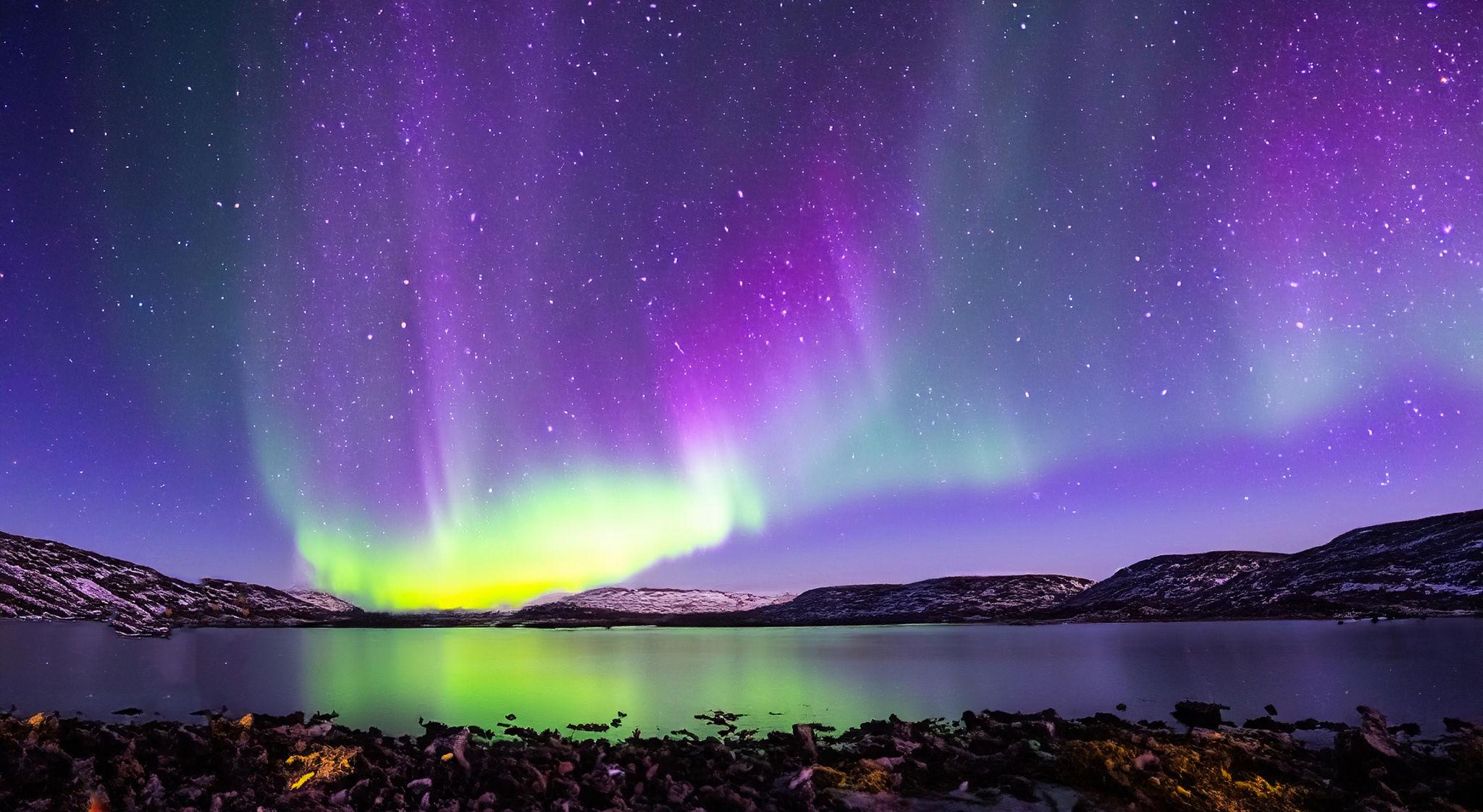
Imagine absolute silence. A still lake reflects the sky like an imperfect mirror. The wind moves across the landscape and everything around you seems suspended. Snow stretches as far as the eye can see. When you look up, the sky is not empty. It is filled with stars.
And then it happens.
A green light appears, diffuse, almost imperceptible. Within seconds, it intensifies. It moves. It cuts through the darkness. It expands. It blends with shades of purple and creates a spectacle that does not follow human rules. It is not static. It is not predictable. It is a dance.
Today, we know this phenomenon as the northern lights. But for centuries, it was interpreted in very different ways.
What the northern lights really are
From a scientific point of view, auroras are the result of the interaction between solar particles and the Earth’s magnetic field. When these particles collide with gases in the atmosphere, they release energy in the form of light, creating the colours we see in the sky.
Green: oxygen at lower altitudes
Red and purple: oxygen and nitrogen at higher altitudes
It is physics. But the experience is not limited to that.
The meaning of the northern lights in different cultures
Before science, there was interpretation. And each culture tried to explain the inexplicable.
Iceland
Icelanders associated the northern lights with birth. It was believed that they could ease the pain of childbirth, but there was one condition: not to look directly at the sky, or the child could be born with vision problems.
Greenland
For some peoples, the lights represented the souls of children who were never born or who died at birth.
Finland
This is where one of the best known interpretations appears: the “fire fox”. According to legend, a fox ran across the snow and, with its tail, sent sparks into the sky. This is where the Finnish name revontulet comes from, literally meaning fire fox.
Sweden
The northern lights were seen as a positive sign. Light, warmth and a promise of abundance, especially in fishing.
Norse mythology
The interpretations become more symbolic here.
The northern lights were associated with the Valkyries, warrior women who decided the fate of fighters. The lights in the sky were believed to be the reflection of their armour.
Another theory connects the phenomenon to the Bifrost bridge, the luminous path that guided warriors to Valhalla.
Why they continue to fascinate
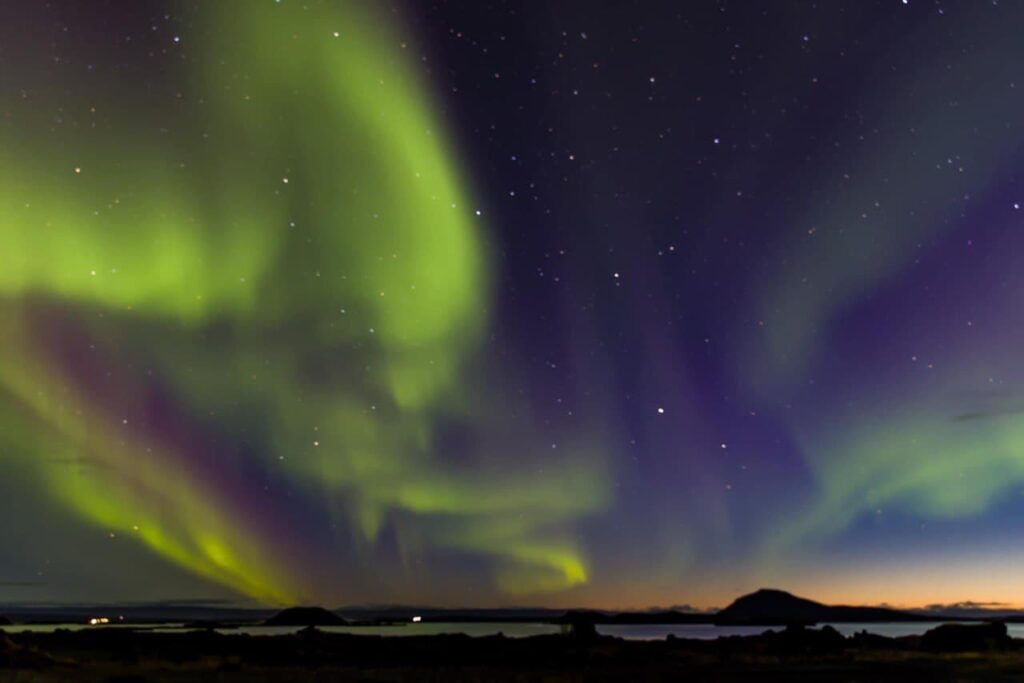
Even with a scientific explanation, the northern lights still have the same impact. They cannot be replicated. They are not guaranteed. They do not follow a schedule.
And that is exactly what makes them valuable.
You are not consuming a show. You are witnessing something that may or may not happen, and when it does, it never repeats itself in exactly the same way.
Is this experience worth it?
Yes, but with adjusted expectations.
Seeing the northern lights depends on several factors:
Solar activity
Weather conditions
Absence of light pollution
The right timing
It is not guaranteed. But when it happens, it is worth it.
That is why choosing the right season is decisive. To better understand the best months to travel, also read our guide on when to visit Iceland.
How to include it in an itinerary
If you are planning a trip to Iceland, the approach should be strategic:
Reserve several nights to increase the probability
Avoid depending on just one day
Choose locations outside Reykjavík for better visibility
Follow northern lights and weather forecasts
You can keep imagining it. Or you can be there when the sky decides to happen.
After a night dedicated to chasing the northern lights, it may make sense to balance the itinerary with a more relaxing experience, such as Sky Lagoon in Reykjavík.
If you want to include a northern lights hunting experience in your itinerary, we take care of it for you, with realistic planning and a focus on what matters: maximising the probability of seeing the phenomenon at the right moment.